

Closed-loop water, open-ended craft

A factory tour with Steve Vanhinsbergh
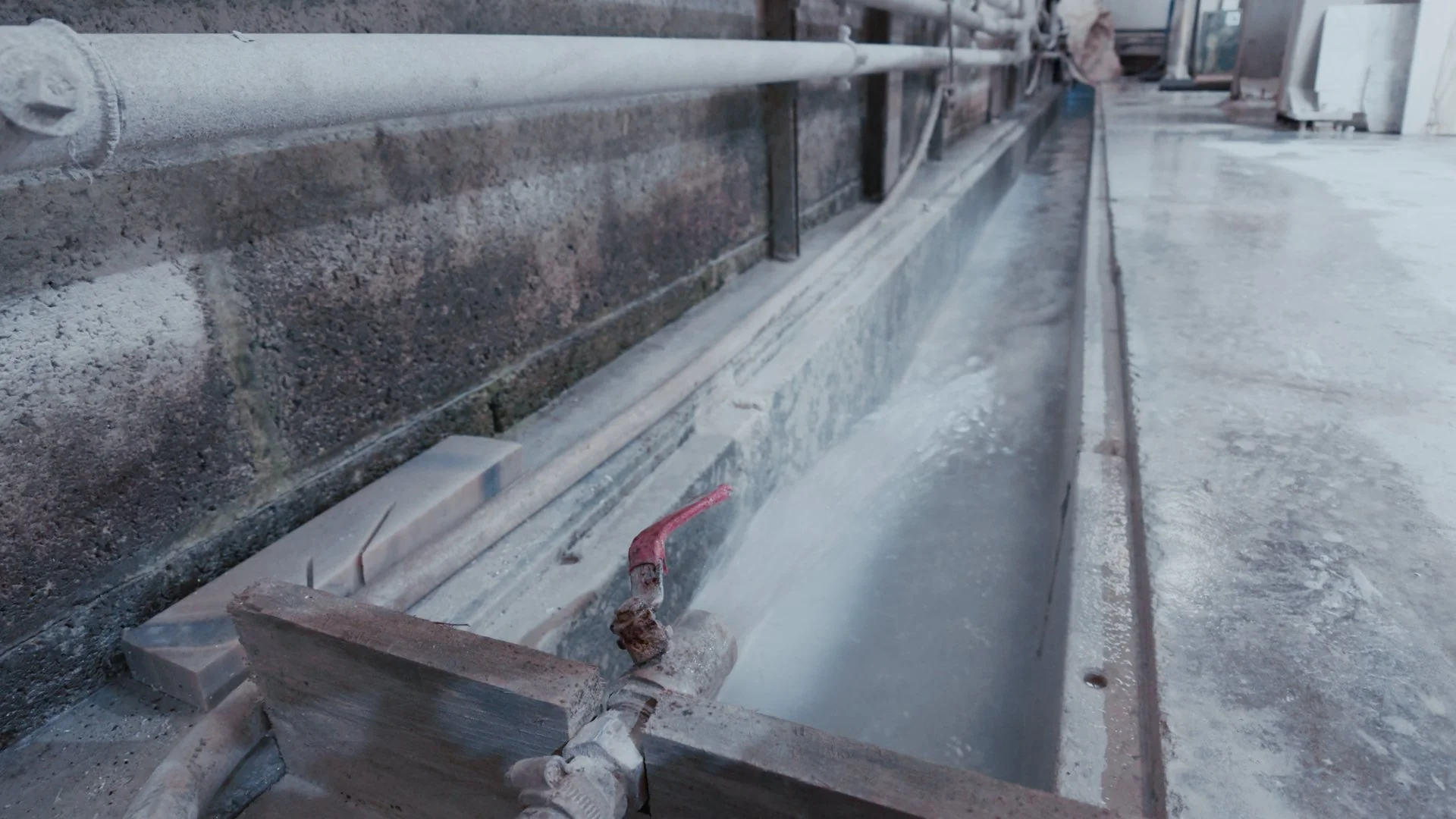
 
Water recycling system at stoneCIRCLE
 

A few weeks ago, we shared how sustainability is built into our stone fabrication process. Today, we’re going deeper into the one resource that keeps a stone factory moving: water.


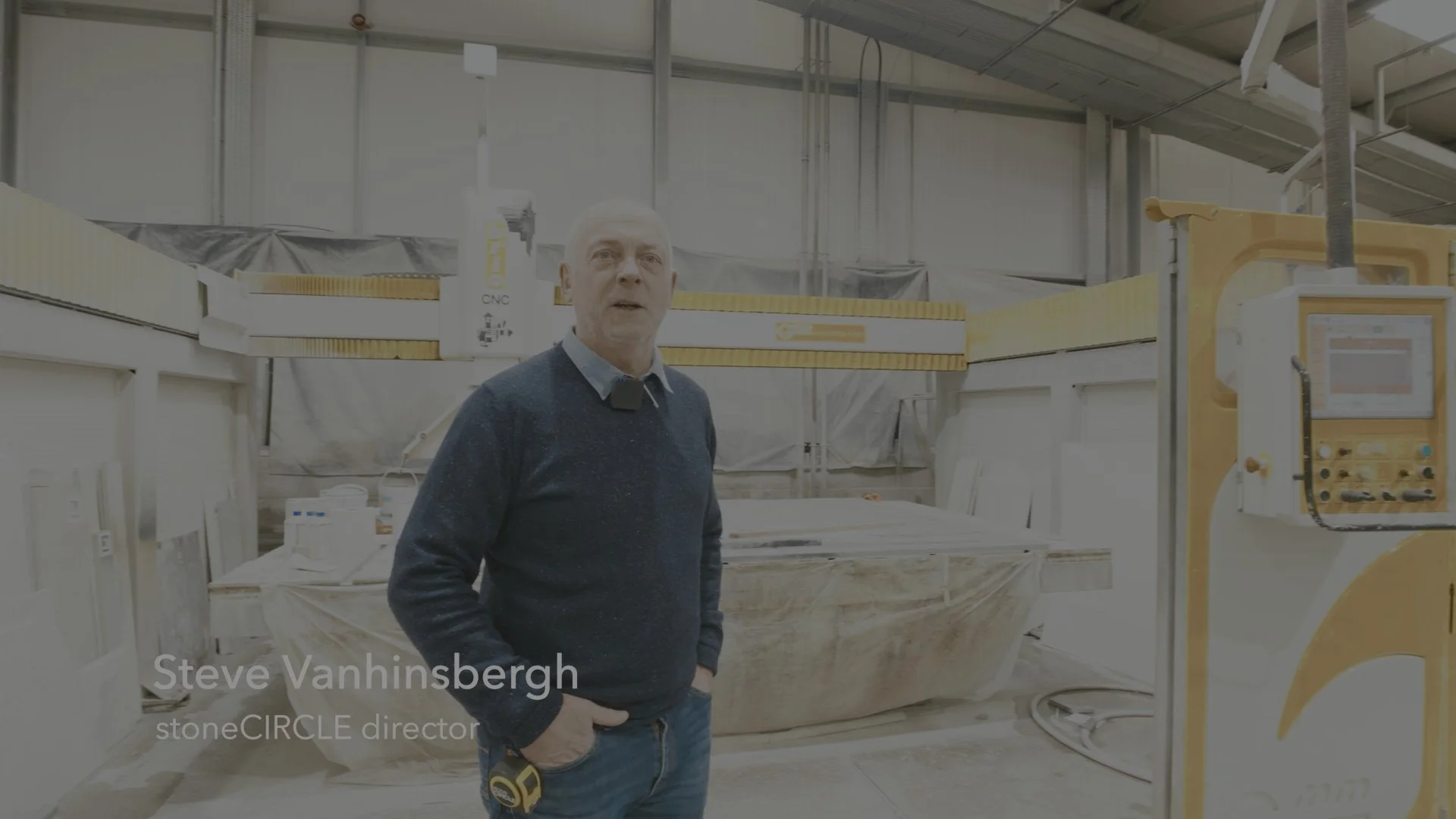
In this short video, Steve Vanhinsbergh takes you around our facility to show exactly how we manage water from our manufacturing processes; how it’s collected, cleaned, and returned to the factory so we can keep producing without unnecessary waste.
 

It starts under your feet. Much of our factory floor is intentionally sloped, directing water towards a drainage channel that runs the full length and width of the building. The system is designed to keep things moving. A continuous flow is maintained via hoses so the water doesn’t settle and silt up.


From there, the water is fed through pipework to the workshop as part of a ring main that delivers clean recycled water, plus air, around the factory. This means the team can connect machines and tools as needed, efficiently and consistently, without relying on a fresh mains supply for every process.


Outside the workshop, the real transformation happens. The used water is pumped into the settlement and processing equipment, where it’s separated in a cone system. A flocculent is added to help particles bind together, and gravity carries the water through filter bags, allowing clean water to drain out and return to the system.

What’s left is slurry, which we collect and dispose of responsibly.


And we don’t stop at process water. We also harvest rainwater from the roof, storing it in a tank holding 72,000 litres, helping keep the factory running while reducing demand on the mains water supply.


This is sustainability as a working system: engineered into the building, maintained daily, and designed to support the standard of quality we’re known for. If you’re specifying stone for a project, we’re always happy to talk through the most efficient, long-lasting solution.

 
Marco Fazio

Marco Joe Fazio is CCO and director of photography at space+style™ by marco joe fazio Ltd, working in fashion, hospitality, food & drink, architecture and design.

Born and raised in Tuscany, Italy, Marco learned the rudiments of photography and the magic of the darkroom in his early school years. Thereafter, he worked in architecture, interior, and lighting design for two decades. During those years, Marco founded an award-winning architectural studio and managed a multidisciplinary design team, working mainly for fashion industry clients.

Since moving to London in 2008, Marco has been recognised as a Chartered Architect of the Royal Institute of British Architects (RIBA) while pursuing his dream of connecting the worlds of architecture, design, and fashion from the photographer's perspective.

After years of passionate dedication, hard work and professional achievements, he was awarded the Fellowship certification (FBIPP) by the British Institute of Professional Photography and won the Peter Grugeon Award for the Best Fellowship of the Year in 2016. Subsequently, he has been admitted as a member of the highly regarded Association of Photographers (AOP). 

Having achieved a stronghold in coordinated image and photography for the design and fashion world, Marco has taken his expertise into the hospitality market; luxury and boutique hotels, fine dining restaurants, and the drinks and beverage industry are all reaping benefits from his services.

Today, Marco is leading his agency in assignments in the hospitality, fashion, and design industries.

Creative photography, cinematography, coordinated images and brand marketing form the core of his services.

Thanks to more than a decade in the music industry, Marco has expendable knowledge in composition and sound engineering. That knowledge is a valuable asset in creating licensed soundtracks and magnetic sound designs for commercial productions.

Marco's passion and another branch of his business are mentoring and nurturing new visual arts talents. In 2016, he launched "telling [fashion] stories" – photography & set design workshops – and more recently, he has become a lecturer for the School of Art and Creative Industries at London South Bank University (LSBU).

The crossover between genres and industries is a peculiar and essential factor in his work, contributing to thinking outside the box and achieving a unique style rich in symbolism and content.

Next
Next

All the Colours of Stone